Pastor Julianne D. Smith
Assistant to the Bishop for Congregational Vitality
Director for Evangelical Mission
Northeastern Ohio Synod, Evangelical Lutheran Church in America
Growing up, it was not uncommon for me to be taken to the funeral or visitation of a distant relative, or a member from our church. Since most of them took place on weekdays, it was usually my mother who took me since Dad was teaching. For the most part I don’t recall much about these visits. My mother would pause at the registry to sign her name, and then we would go forward to the casket where she would view the deceased and tell me about the person. “This is your cousin twice removed.” “She was a leader at church.” “He was your Aunt Vrina’s brother.”
It might sound morbid, taking a young child to funerals. However, I think my parents were onto something. By taking me to visitations of people who, for the most part, weren’t close to me, it helped me think of viewings and funerals as a regular part of life. When I was older, it wasn’t a fearful to walk up to a casket, or attend a funeral service. When someone close to me did die, I wasn’t suddenly thrust into facing death for the first time.
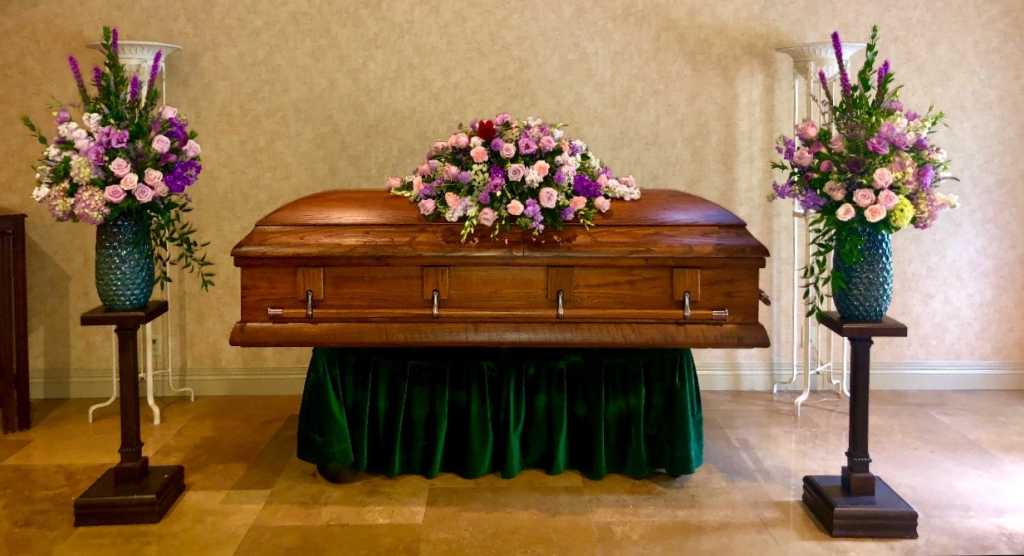
I especially remember going to my Uncle Mundo’s viewing and funeral and wondering why everyone was crying. I was probably 3 or 4 at the time. He had died young in an accident at the coke mill where he worked. He left a widow, and a son, who was a few years older than myself. So yes, people were sad and people were crying. I felt puzzled by the great amount of grief. Of course, now I understand.
I’ve been thinking about this lately because it appears that visitations/viewings and funerals are apparently not as common as they once were. When I glance through the obituaries in the paper (it’s a pastor thing) I notice that many finish with “there will be no viewing or service.” Sometimes the person was so old the family doesn’t think anyone will come. Sometimes it’s due to the wishes of the deceased.
When I was on internship, a woman my age was quite shaken when her uncle died unexpectedly. She told me that this was the first funeral she had ever attended. I was shocked to think that she had never seen a dead body before, or attended a funeral service. How awful it was to face this great sadness without any preparation of what to expect.
And yet, as one of my professors observed, “Funerals are for the living.” Viewings and funerals are for those who are grieving. It gives them the chance to comfort each other, share stories about the deceased, and perhaps be able to put to rest unresolved parts of their relationship with the deceased. I remember the wonderful stories we heard about each of my parents during their visitations. That was a real gift.
Once, I had a parishioner who had decided not to have a viewing when he died. However, he was the former police chief in the town, and many people wanted to come and pay their respects. Finally, his widow realized that she could not honor his request because of the outpouring of love she was receiving. So she included a time of visitation prior to the service. It was a blessing for her and the family to hear how much others cared.

Funerals come in all sorts of styles and sizes. Some are religiously focused while others may be a time of story telling with no sort of service. Some focus on wailing, and others celebration. In all instances, the “coming together” makes a difference for those who are among the living and grieving.
 Random Thoughts from a Random Mind